Aquatic Centre opening signals new beginning for booming Mount Barker
The word is out: booming Mount Barker is the place to be.
The community – located a short 30-minute drive from Adelaide via the South Eastern Freeway – is fast becoming a magnet for families, businesses and developers, turning the township and surrounding areas into one of South Australia’s major regional centres.
Every year, around 1,000 new residents move into the district and by 2046 the 46,000-strong population is anticipated to swell to nearly 65,000.
According to Mount Barker District Council Infrastructure General Manager Phil Burton, the region still has so much room left for more significant growth following the state government’s decision to rezone 1300 hectares for housing back in 2010.
“We’re still only 25 percent developed,” Phil says. “That gives you an idea of what’s yet to come.”
For the council, this rapid expansion isn’t just about housing – even though 550 new homes need to be built every year to cater for the expected population surge.
“It’s about making sure the services, facilities and infrastructure are ready to support a much larger community,” Phil says.
“That means planning for both the exciting, highly visible projects that bring people together, and the potentially less glamorous but equally important systems that are crucial to supporting development.”
The new $51.8 million Summit Aquatic and Leisure Centre is one big ticket project aimed at future proofing Mount Barker for decades to come.
Delivered ahead of schedule and within budget – and jointly funded by local, state and federal governments as well as developer contributions – the multi-purpose facility was officially opened in August and is set to transform sport and recreation in the Adelaide Hills.
“It’s been 10 years in the making,” Phil says. “We knew the old outdoor pool was reaching the end of its life and that it wouldn’t cater for the community’s future needs, given the expected population increase.”
“In 2015, council began the planning work, developed a business case, and sought funding from both state and federal governments. Since then, we’ve worked through multiple design iterations with our community, established a Community Reference Group, and involved residents at every stage.
“It’s given the community a sense of ownership and everyone, including residents and council staff, are excited that they now have a high-level swimming and recreation facility in their own town all year round – rather than having to travel away from Mount Barker to access these services.”
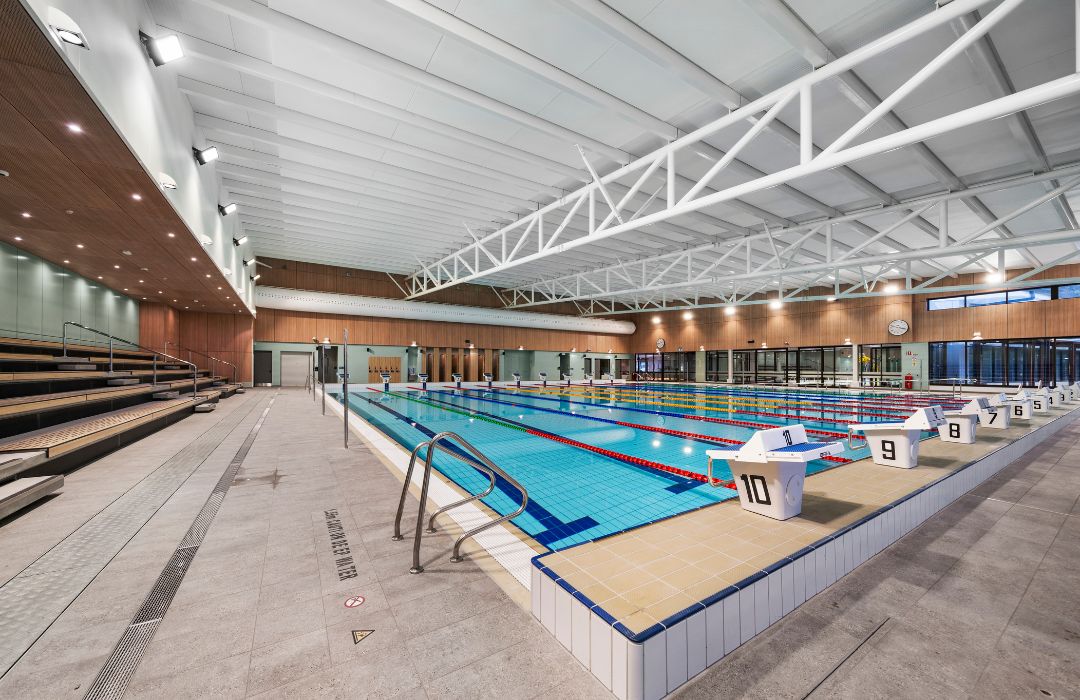
The Summit Aquatic and Leisure Centre (SALC) offers something for everyone including a 25-metre, 10-lane competition and lap pool, a warm water therapy pool, a learn-to-swim pool and children’s water play area as well as a gym, group exercise studios, community rooms, a creche and a café.
Inclusion has been a priority, with the centre boasting the region’s first Changing Places facility which offers more features than a standard accessible bathroom and is specifically designed for people with high support needs. Gradual railed ramp entry to the pools is another accessibility feature of the facility.
While the opening of the centre is a huge milestone, it’s only the first stage – future expansion plans for the SALC include an outdoor 50-metre pool, expanded aquatic leisure facilities, indoor sports courts and additional community facilities and recreational activities to support the region’s growth.
The SALC is the latest addition to the 50-hectare, council-owned Summit Precinct.
The area will combine community facilities – comprising the centre, Summit Sport and Recreation Park and a planned adventure playground – with privately operated leisure and entertainment offerings including a $50 million, 120-room hotel to be built by South Australian developer Accord Property.
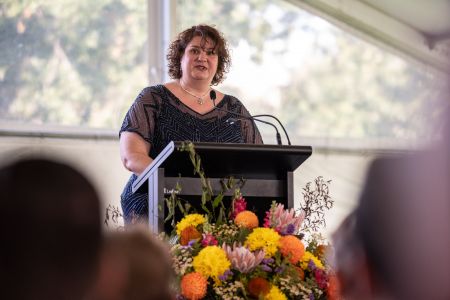
Mount Barker District Council Community Planning and Wellbeing Manager Maddie Walker says the SALC’s success is a great example of what local government can achieve with the right support and financial backing as a trusted partner.
“When you can show you deliver on time and within budget, it gives state and federal governments confidence to back you again,” Maddie says.
“This project helps Mount Barker demonstrate we can manage major investments – and that’s vital when we’re advocating for other priorities.”
Earlier this year, Mount Barker District Council released its new Advocacy Plan, detailing six top priorities of focus between now and 2029.
At the top of the list is an upgrade of the Laratinga Water Recovery Plant and trunk infrastructure – a $150 million-plus project that’s essential for delivering necessary community wastewater services and helping meet Mount Barker’s housing targets.
The council owns and operates the state’s largest wastewater business outside SA Water, through newly formed subsidiary GMB Water, and is seeking a $48 million contribution from state and federal governments to service the rapidly growing region.
“A wastewater service isn’t something people see or think about every day – but without it, we can’t support the level of growth that’s coming,” Maddie says.
“Our investment in facilities like the SALC cater for future growth, but that growth only happens if there’s essential services, like wastewater, in place to support the associated housing needed to accommodate such a population increase.
“We’re showing we can deliver on our side, and hopefully that will encourage our state and federal partners to contribute to solutions.”
Another key priority is public transport provisions, which the council says is currently falling short of what’s required to meet demand.
While council’s advocacy achievements include the state government committing nearly $13 million over the next five years to transition local on-demand transport service Keoride from a trial to a permanent fixture, greater investment in transport infrastructure – such as expanded bus routes – remains an ongoing focus.
So too does increased funding for major road upgrades – including key intersections and arterial routes – and local health services.
Phil says by aligning the Advocacy Plan with state and federal goals, the council is bringing a targeted, evidence-based approach to negotiations – rather than a sprawling wish-list – and is seeing results.
“We’ve had some great wins recently with funding for roads, but there’s still significant congestion – particularly in Mount Barker along key corridors such as Adelaide Road, Wellington Road, and Flaxley Road,” Phil says.
“When it comes to advocacy, if we can say ‘we’ve done the modelling, we know where the pressure points are’, it means we can have targeted conversations about solutions. That’s much more compelling than a broad ask.
“It’s about building relationships and showing how our projects help the state and federal governments achieve their own targets – whether that’s housing, transport or community wellbeing.”
For now, the long-awaited opening of the Summit Aquatic and Leisure Centre is a cause for celebration for Mount Barker District Council and its community – and a reminder that the region is constantly growing and changing.
“Councillors past and present, staff, contractors, local trades and community – everyone’s played a role in delivering something we can all be proud of,” Maddie says. “It’s something special to see it all come together.
“We’re building for today, but also for the Mount Barker of 20 or 30 years from now. That’s the most exciting part.”