Port Augusta leading the way to build safer public spaces
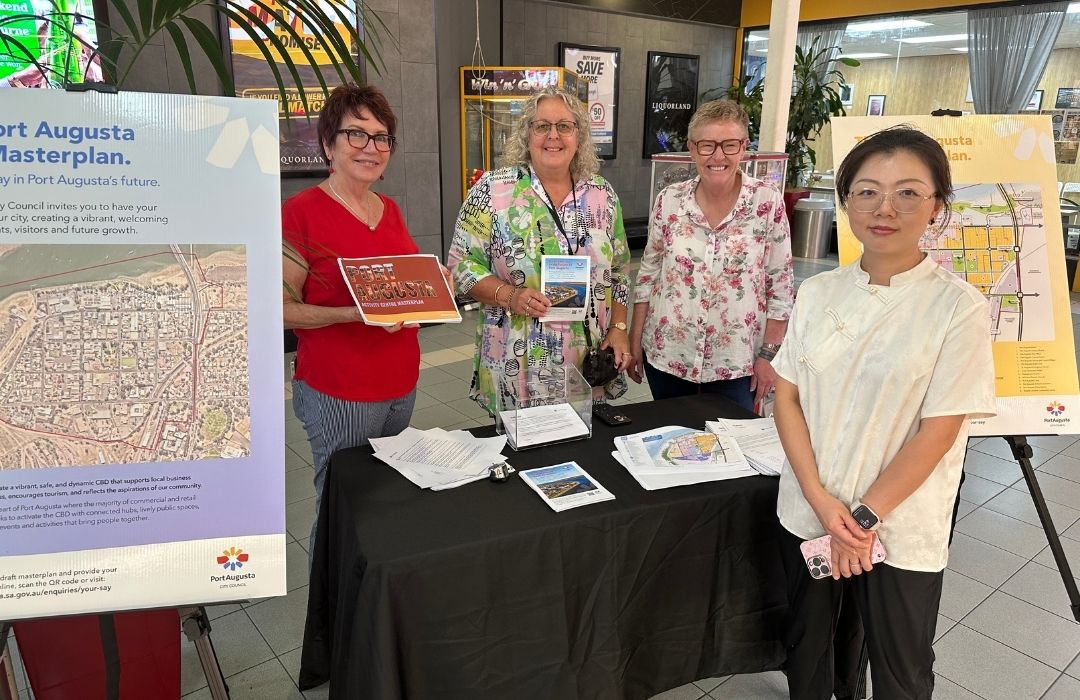
Port Augusta City Council is continuing to lead the way in creating a safer community by commencing Stage Two of its Building Safer Spaces Program.
The program began last year through Stage One, which saw a detailed city-wide safety audit completed and 22 new CCTV cameras installed throughout the Central Business District and key public spaces, improving security, surveillance and community safety outcomes in high-use areas.
The work was made possible by a $200,000 State Government investment.
Stage Two now expands on this progress through a $543,000 co-investment between Port Augusta City Council and the State Government, focusing on practical, evidence-based interventions that improve safety, strengthen business confidence and support more active use of public spaces.
Governed by a multi-agency Safer Spaces Committee involving council, SAPOL, the Department of Human Services and the Business Port Augusta network, the project combines Crime Prevention Through Environmental Design (CPTED) principles with community engagement, technology and targeted place activation.
Port Augusta City Council CEO John Banks says this latest phase aims to reduce the risk of crime, improve safety for staff and customers, enhance shopfront appearance and street presence, and support a more vibrant town centre.
He emphasised the importance of maintaining momentum beyond infrastructure upgrades.
“Stage One gave us the critical foundations – better visibility, better data, and stronger surveillance in key areas,” he says.
“Stage Two is about turning that foundation into long-term change through design, engagement and activation.”
Six months into delivery, the latest phase remains on track and is already delivering meaningful outcomes.
One of the key early achievements has been the successful rollout of CPTED training across multiple council departments, including operations, planning, infrastructure and horticulture teams, alongside participation from SAPOL.
Delivered in April, the training focused on how urban design, lighting, landscaping, visibility and activation can influence perceptions of safety and reduce opportunities for antisocial behaviour.
Importantly, the training also included a practical public space safety audit –the first of six planned audits to be conducted across residential and community areas throughout the Building Safer Spaces Program.
The project has also strengthened governance and communication pathways, with two Safer Spaces Committee meetings already completed and clear operational roles established across partner agencies.
A mobile CCTV trailer network was also being procured and was expected for delivery by the end of June.
Once operational, deployment locations will be jointly planned by council and SAPOL to respond flexibly to emerging issues and community concerns.
For Port Augusta Mayor Linley Shine, the broader community and economic benefits of the program are clear.
“When people feel safe in their public spaces, they stay longer, they visit more often and they support local business,” she says.
“That confidence flows directly into our local economy and strengthens the heart of our city.”
The project team has also launched a dedicated project website and commenced direct engagement with local businesses, recognising that business participation is critical to long-term success.
A business forum held in February provided valuable insight into safety concerns and operational challenges within the CBD, particularly around rear staff parking and service areas near Commercial Road and El Alamein Road.
In response, the council issued direct correspondence to affected businesses outlining immediate engagement and next steps.
A second business forum in June helped position discussions closer to the commercial areas most impacted and encouraged broader participation from business owners and operators.
“Engaging with our business community and ensuring they’re informed right throughout this process has been critical,” John says.
“At the end of the day, this work is about creating a safer Port Augusta for visitors and locals, and our business community will directly benefit from it – we had to be sure we got their input.”
The next phase of the Building Safer Spaces program will continue to focus heavily on business and community activation initiatives.
Matched funding grants were launched in May, supporting businesses to undertake their own CPTED improvements and frontage upgrades.
Expressions of interest are being reviewed following the June business forum.
Council is also commencing direct engagement with property owners who have inactive or non-operational frontages, encouraging participation in an art activation program aimed at improving vibrancy, visual appeal and passive surveillance within key areas.
Residents will also be invited to identify locations for future safety audits, ensuring local knowledge and lived experience inform future infrastructure priorities.
“Our community is one of our biggest sources of information – they can tell us the areas that can benefit most from improved safety measures,” Linley says.
“This kind of feedback is invaluable, so we’ve been really conscious about engaging with our residents to inform this program both now and into the future.”
While still in the early stages of delivery, the project is already generating valuable insights for regional local government.
Data collection is integral to the project’s continuous improvement approach.
Non-identifying monitoring of Wi-Fi and charging station usage will inform its community value, alongside participant feedback from CPTED training sessions.
These measures will help evaluate how people interact with public spaces at different times of the day and identify patterns in usage and perceived safety.
The project has also reinforced the importance of trialling technology solutions before broader investment.
Early reflections have highlighted the need to carefully assess the durability and vandal-resistance of certain public realm technologies, such as wayfinding infrastructure, before committing to larger-scale rollout.
“The Building Safer Spaces Program shows how regional councils like ours can take a proactive, partnership-driven approach to community safety and combine urban design, stakeholder engagement and activation to improve both perception and reality within public spaces,” John says.
“By bringing together government agencies, local business and the broader community, we’re actively reducing antisocial behaviour, but also strengthening business confidence, supporting economic activity and creating places where people feel safe to gather, connect and participate.”
As Stage Two progresses, Port Augusta City Council will continue to refine its approach through evidence, collaboration and local feedback – building a stronger foundation for safer and more activated public spaces across the community.