
Yankalilla: A community that rises together
Over the past year, this coastal community has faced a trio of challenges: the Deep Creek bushfires, impacts from the statewide algal bloom, and a storm surge that caused significant damage to the iconic Normanville Jetty.
Through it all, council staff, volunteers, and residents have demonstrated that when the going gets tough, Yankalilla gets going.
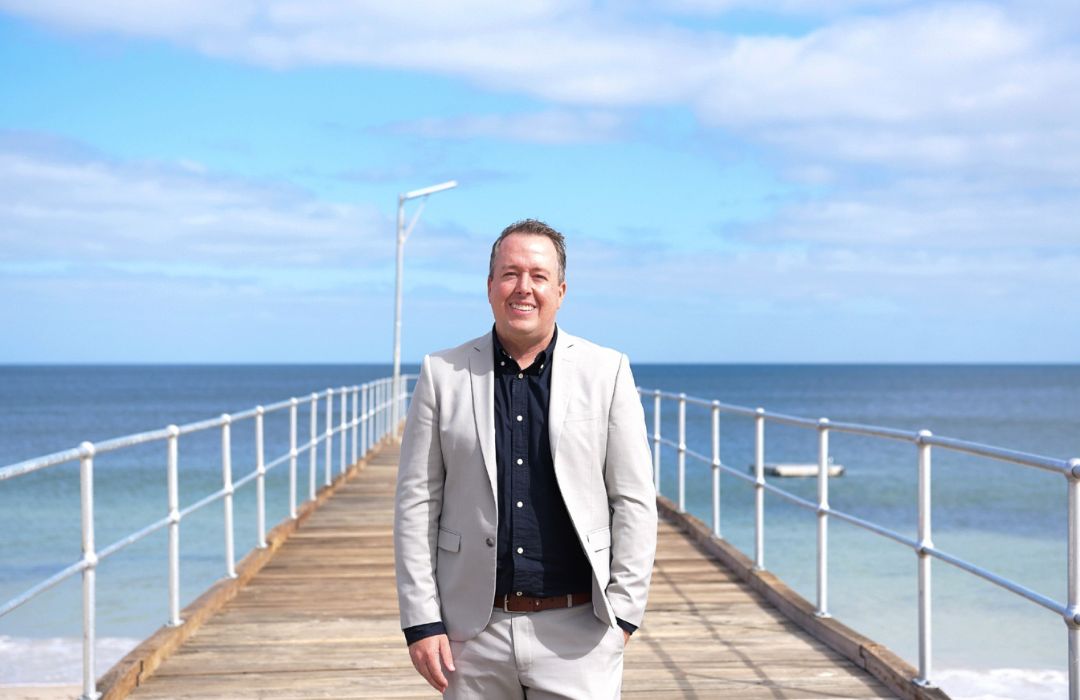
When District Council of Yankalilla CEO Nathan Cunningham looks out across the Normanville foreshore or walks along the coastline, he sometimes pauses and just takes it in.
“It’s spectacular here. You’re less than 90 minutes from Adelaide, but it feels like you’re in the middle of nowhere - and yet there’s this incredible community around you,” he says.
Nathan has seen firsthand how this community rises to every challenge - from wild storms and bushfires to algal blooms - and how the council, alongside its people, has learned to respond with resilience and care.
Normanville Jetty: Weathered, rebuilt, and reopened
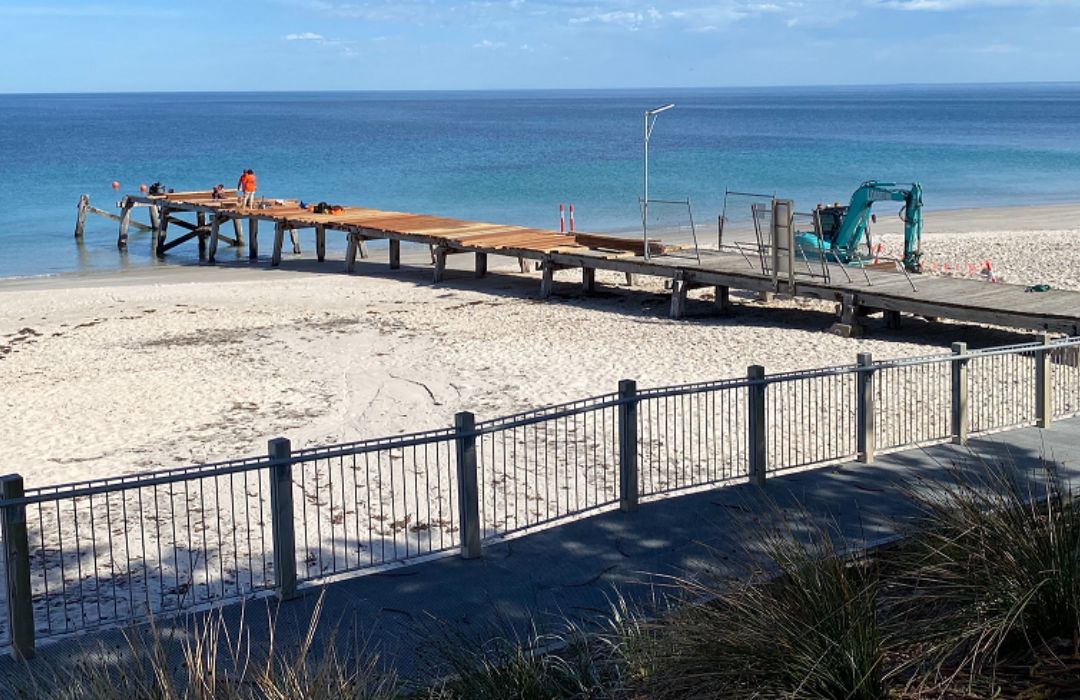
“In June 2025, those storms hit hard,” Nathan recalls. “Normanville Jetty took a real battering - the last 10 metres were almost completely destroyed, and large sections of the deck washed away. It wasn’t just a maintenance issue. It was a once-in-a-generation storm.”
Despite the scale of the damage, Nathan is proud of the council team.
“We got to work straight away together with the Department for Infrastructure and Transport, engineers, and contractors. There was a lot to coordinate - insurance, procurement, safety assessments - but by December, the jetty was fully repaired ahead of the summer holidays,” Nathan said.
“The community had been so patient, and it was really rewarding to see them walking on it again, fishing, meeting up, and using it just as they always have.”
Nathan notes the significance of jetties in small coastal towns.
“They’re not just structures. They’re gathering points, fishing spots, a place where the community connects. Losing it, even temporarily, really shows you what it means to people.”
Algal Blooms: Navigating uncertainty
Just months later, the community faced a different challenge.
“Algal blooms may not be as dramatic as a fire or storm, but the uncertainty it caused was huge,” Nathan explains.
“People ask: is it safe for kids? Can I swim? Can my business still operate? And the state government, while doing their testing, can’t always give simple yes/no answers. That leaves locals and visitors having to make judgment calls, and that’s stressful.”
The council worked closely with its Visitor Information Centre, local businesses, and tourism stakeholders to communicate clearly.
“The Visitor Centre became a hub for real-time information,” Nathan said.
“They helped the public understand what the water was like that day, and how they could still enjoy the region safely.
“The community’s resilience here is incredible - businesses adapted, tourism bounced back, and locals kept showing up for each other.”
Frontline response: Deep Creek Bushfire
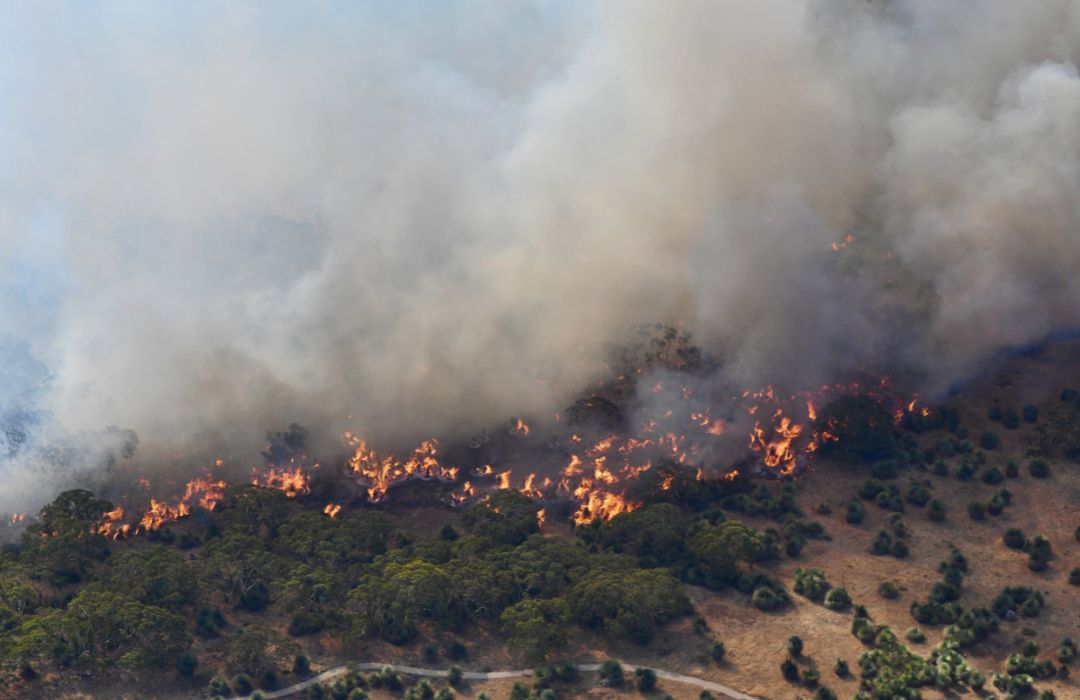
Then came the Deep Creek bushfire in February 2026. On 1 February 2026, fires swept through the Deep Creek National Park on South Australia’s Fleurieu Peninsula, impacting the rugged landscapes near Cape Jervis and surrounding areas. The blaze spread quickly, driven by winds and steep terrain, prompting emergency warnings and drawing hundreds of firefighters from across the state and beyond.
For Tia Russell, Team Leader of Community Services, this bushfire was a defining moment in local emergency response.
“This was the first fire of that scale in the region in decades – we’d not experienced something like this, of this magnitude, since 1983,” she explains.
The blaze brought immediate and widespread concern for locals’ safety - people woke up uncertain if their homes were safe, and some stayed up through the night ready to act on changes in directions and warnings.
Because the fire wasn’t a state activated emergency, the council played a vital role in the on-ground logistics and liaising closely with the SA Country Fire Service to help provide local knowledge and help where needed.
Tia and other council staff were deployed to the regional command centre in Mount Barker, working 12-hour shifts to coordinate everything from fuel deliveries to waste removal, even liaising with local farmers who could provide water pumps at a moments notice
“Having local knowledge made all the difference,” she says. “Even if we didn’t know the answer, we knew who did.”
Once the fire was declared contained after about a week, staff shifted into recovery mode, calling every property in the fire footprint, identifying gaps in community support, and helping connect residents to services and support networks. The council also helped establish a community led recovery committee to guide healing and rebuild efforts.
“It’s a privilege to represent your community,” Tia reflects. “Local government has such a unique role, we live here, we understand these places and people - and we can advocate for their needs in ways others can’t.”
A Community That Cares
Across these crises, one thing is clear: the people of Yankalilla look out for one another. Residents opened their homes to neighbours, supported farm firefighting units, made food for fire fighters and pitched in wherever needed.
“People here just want to contribute,” Nathan says. “Whether it’s volunteering, helping a neighbour, or offering advice on a jetty repair, they care about this place and each other.”
Throughout these events, the Council’s Visitor Information Centre (VIC) has been more than just a place for brochures - it became a hub for real‑time insight and reassurance.
“Yes, we’re a visitor centre, but we’re also a community centre,” says Darren Burgess, Manager of Economy and Tourism.
“Staff provided up-to-date alerts during the fire, shared critical emergency messaging, and helped interpret complex environmental events like the algal bloom for both residents and visitors.”
Darren emphasises that tourism is a vital economic lifeline: “every visitor touches local businesses, from cafes and accommodation to service stations and small retail outlets,” he said.
“Initiatives like the State run voucher programs helped reengage visitors and support business confidence across the region.
Through it all, Yankalilla is entering a new chapter, one built on lessons learned, strong leadership, and a community spirit that refuses to waver.
Whether facing fires, floods, or algal blooms, this coastal gem has proven it can weather anything, together.